


by Dr Stephanie Borchardt, 26 February 2026
Held on 16–17 February 2026 in Stellenbosch, the Drylands Workshop was jointly hosted by the Department of Agriculture (DoA) / Agricultural Research Council (ARC) Centre of Excellence in Integrated Rangeland Systems and the DSTI–NRF South African Research Chair (SARChI) in the Sociology of Land, Environment and Sustainable Development. The workshop convened researchers and institutional partners to reflect on the growing need for genuinely interdisciplinary and multidisciplinary research that speaks to South Africa’s drylands. Rather than treating drylands as narrowly ecological or technical spaces, the workshop foregrounded them as complex socio-ecological systems shaped by overlapping environmental, political, economic, and institutional dynamics.

Over two days, the programme combined strategic framing sessions, facilitated plenary discussions, and intensive breakout groups focused on identifying key drivers of change, mapping actors and research across the Karoo region, clarifying institutional mandates, and co-designing future research pathways. A central component of the workshop was two in-depth breakout sessions, which revealed several overlapping and interconnected thematic concerns.
These included climate change and adaptation, the socio-economic challenges facing small towns, processes of erosion and land degradation, water scarcity and water governance (including groundwater resources), as well as the impacts of large-scale land use change associated with mining, proposed green hydrogen developments, conservation initiatives, and renewable energy expansion. Alongside longer-standing concerns with land use, rangeland management, and climate stress, these discussions highlighted the cumulative and often uneven pressures reshaping dryland landscapes and livelihoods.
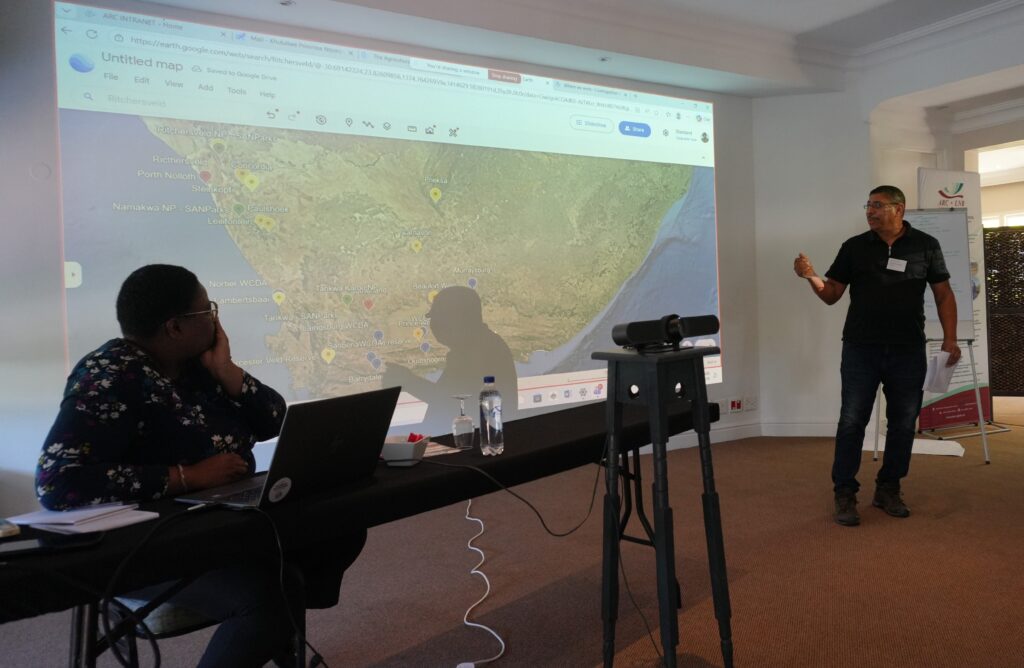
Clement Cupido facilitating the Drylands research mapping exercise, Photograph by SP Borchardt
This collective mapping exercise also highlighted that much of the current research momentum is being driven by the natural sciences and natural science students, pointing to a critical gap: the need for stronger and more systematic social science engagement to grapple with lived realities, power relations, and governance challenges in dryland regions. Participants used the breakout groups and synthesis sessions to identify priority research themes, surface blind spots, and reflect on how different disciplinary approaches could be better integrated.
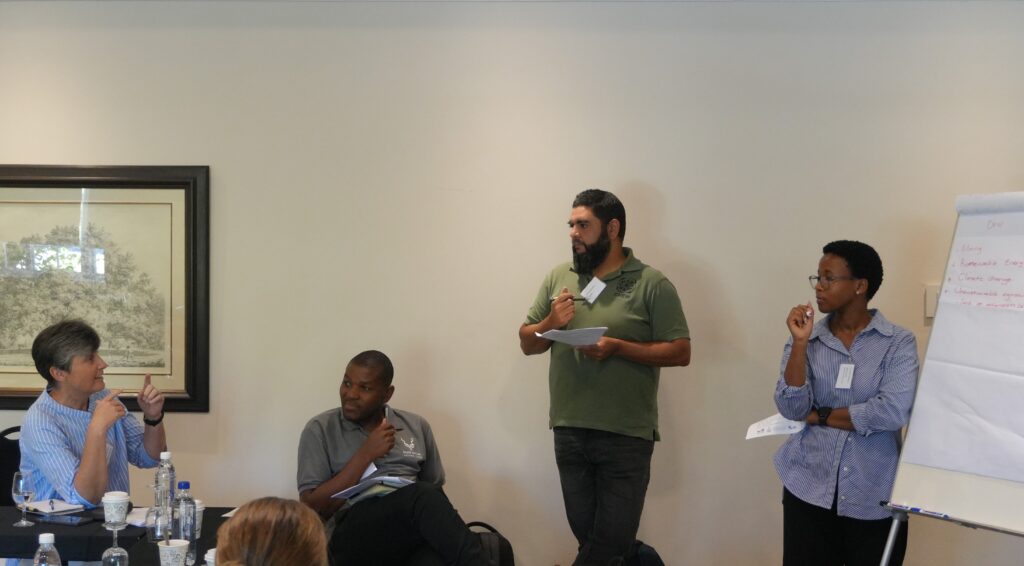
Nelmarié Saayman, Western Cape Department of Agriculture, highlighting key research gaps during one of the breakout group sessions, Photograph by SP Borchardt
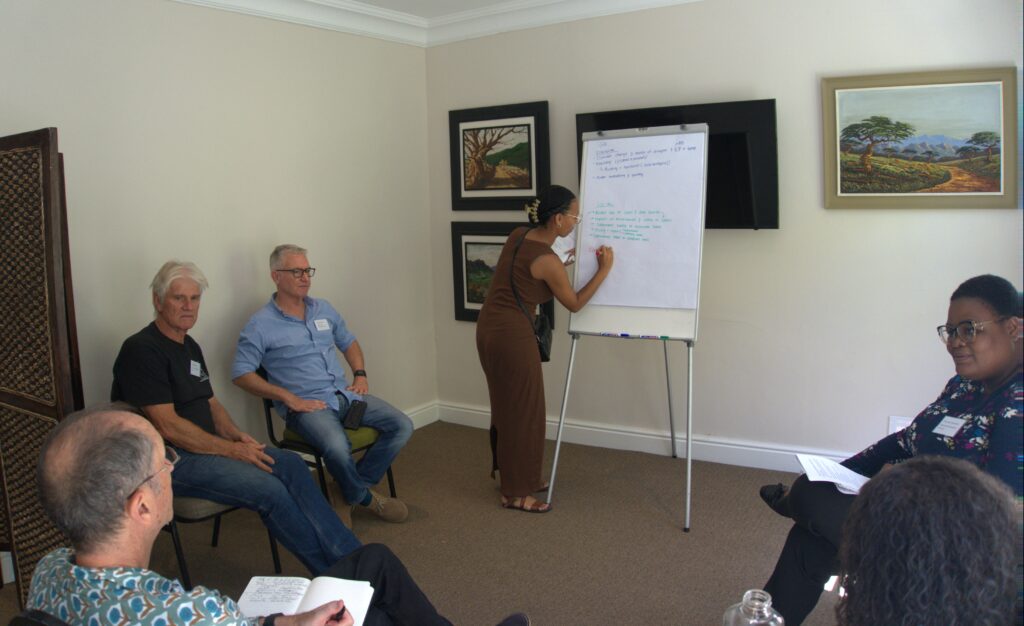
Breakout room discussion on research themes in the drylands, Photograph by SP Borchardt
Discussions emphasised that understanding drylands requires moving beyond sectoral silos towards collaborative frameworks capable of capturing social, ecological, and institutional interdependencies. The workshop, therefore, placed particular emphasis on co-designing interdisciplinary research questions, clarifying roles across institutions, and identifying realistic pathways for sustained collaboration. Overall, the event aimed to strengthen a coordinated, cross-disciplinary research community, while positioning South African drylands research within broader global debates on dryland governance, sustainability, and socio-ecological transformation.