


Dr Stephanie Paula Borchardt
Postdoctoral Research Fellow in the SARChI Research Chair in the Sociology of Land, Environment, and Sustainable Development, Department of Sociology and Social Anthropology, Stellenbosch University
What does it take to farm regeneratively? And who should bear the costs of making agriculture more sustainable?
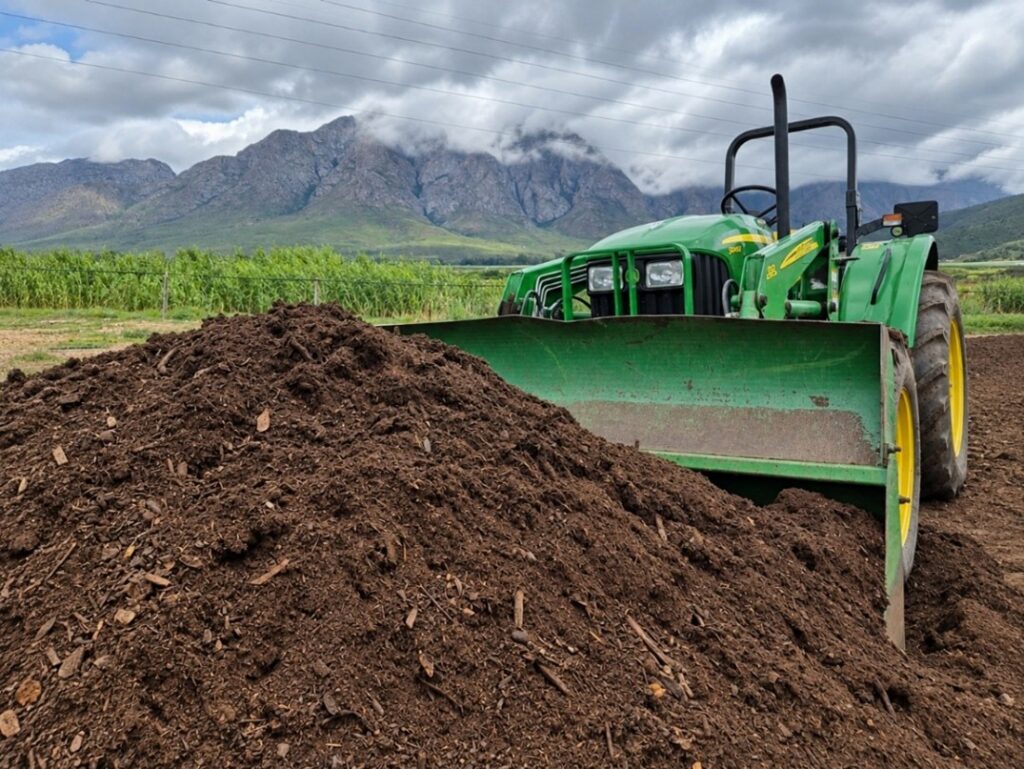
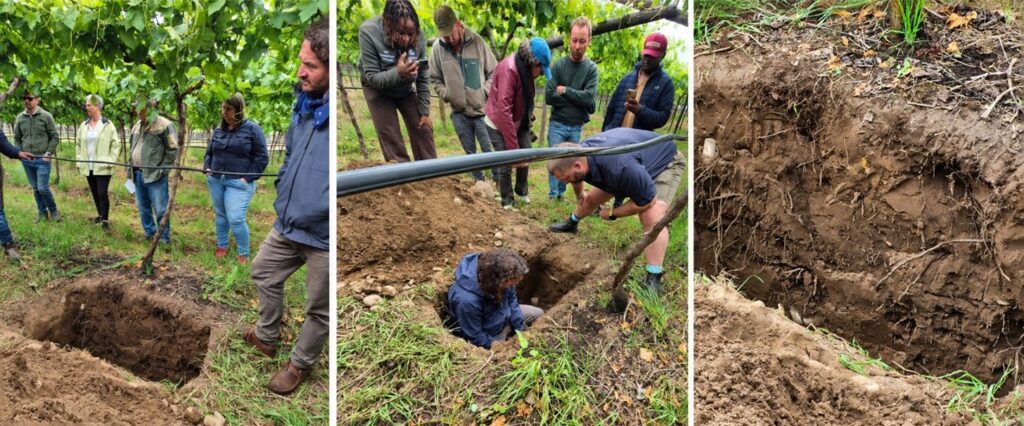
These questions emerged from the Biodiversa+ workshop, held at Stellenbosch University from 5 to 7 October 2026. The workshop brought together researchers to examine soil health, regenerative agriculture and the ecological processes that shape agricultural landscapes. Through visits to Langgewens Research Farm and Oorkant Farm, alongside presentations and discussions, we explored how farming practices affect soil health and what adopting regenerative approaches involves in practice.
The visit to Oorkant Farm, where table grapes are grown using regenerative practices, was a particular highlight. Seeing these practices on the ground offered insight into the practical realities of changing how we farm. It also brought into focus a question that extended beyond the ecological benefits of regenerative agriculture: what does it take, financially and socially, to make these changes possible?
Looking beneath the surface
One of the most valuable lessons from the workshop was learning to look at soil differently. Its structure, chemical properties and biological activity reveal much about how agricultural systems function. Presentations on soil health, microbial communities, grazing practices and agroecological strategies highlighted the relationships between farming practices and ecological processes.
Yet regenerative agriculture is not only an ecological question. It also involves decisions about investment, labour and financial risk. This became particularly apparent in discussions about the costs of changing established farming practices. Improving soil health may offer long term environmental benefits, but achieving these outcomes requires resources, time and sustained effort.
Who pays for sustainability?
What stayed with me was how frequently the costs of regenerative agriculture came up. Changing farming practices can require upfront investment, additional labour and a willingness to accept uncertain returns. Farmers may need to alter production methods or take on loans while continuing to cover wages, repayments and operating expenses. The ecological benefits, meanwhile, may take time to materialise.
The challenge is not simply that regenerative agriculture costs money. It is that the costs of producing environmental benefits are not necessarily reflected in the prices farmers receive for their produce.
Farmers may invest in improving soil health and reducing land degradation without receiving higher prices or more secure incomes. The environmental benefits can extend beyond the farm, but the financial risks often remain with the producer. This creates a tension between the environmental outcomes we want to achieve and the economic arrangements through which food is produced.
Farmers are encouraged to adopt sustainable practices, yet the financial incentives to do so may be limited. In effect, they may be expected to subsidise environmental sustainability through their own capital, labour and willingness to carry risk. The question is not simply whether farmers are willing to change, but whether the economic conditions exist to support that change.
These costs are also unevenly distributed. Farmers with access to capital and financial reserves may be better positioned to absorb uncertain returns, while those operating under tighter financial constraints have less room to experiment. The ability to farm regeneratively is therefore shaped not only by environmental knowledge and commitment, but also by access to resources and financial security.
Labour is another often hidden cost. Regenerative practices require time for monitoring, planning and managing the land. When this work goes unpaid or is absorbed into existing workloads, its true cost disappears from the accounts, even though it remains essential to achieving ecological improvements.

Beyond individual responsibility
These questions cannot be understood by looking at individual farms alone. Farmers operate within wider food systems shaped by buyers, retailers, supply chains and consumer purchasing power. Consumers may be encouraged to pay more for sustainably produced food, but not everyone can afford to do so. Farmers, meanwhile, do not necessarily control the prices they receive.
It is therefore too simple to frame the challenge as a question of whether consumers are willing to pay more. We also need to consider how value is distributed across the food system, and whether the economic arrangements surrounding agricultural production adequately support farmers who invest in environmental improvements.
This raises broader questions about responsibility. If regenerative agriculture produces benefits that extend beyond individual farms, how should the costs of achieving those benefits be shared? What role should agricultural policy, financial support, buyers and retailers play? And how can regenerative practices become accessible to farmers with different levels of financial security?
These questions do not mean that every regenerative practice should automatically command a higher price, or that its environmental benefits should be taken for granted. Rather, they highlight the need to consider ecological outcomes alongside the economic conditions required to achieve them.
Making sustainability possible
The Biodiversa+ workshop offered a valuable opportunity to connect soil science with the practical realities of farming. I left with a better understanding of regenerative agriculture, but also with a broader appreciation of the social and economic questions surrounding the transition.
If environmental sustainability is a collective good, its costs cannot simply be left to individual farmers to absorb. Supporting regenerative agriculture requires more than encouraging changes in farming practices. It requires attention to the markets, institutions and labour arrangements that make those changes possible.
The challenge is not only to produce food more sustainably, but to ensure that the transition does not depend on farmers carrying an unfair share of its costs.