


By Stephanie Borchardt
I recently returned from the seventh Political Ecology Network (POLLEN) Conference, held from 29 June to 3 July 2026 in Barcelona, where more than 1,400 researchers, practitioners and activists gathered to discuss some of the most pressing questions in political ecology. This year’s theme, Diverse Origins, Multiple Futures: The Stories of Political Ecology, offered a rich space for critical dialogue on environmental justice, extraction and socio-ecological transformation.
A highlight was presenting my own research, “The New Frontier of Extraction: Green Hydrogen and Colonial Continuities in South Africa’s Northern Cape,” as part of a double Green Economy panel, The Green Hydrogen Frontier in the Global South: Capitalist Expansion, Colonial Continuities and Political Contestations, convened by Dr Noura Alkhalili, Dr Eric Cezne and Dr Tobias Kalt. The panel brought together scholars working on the political ecologies of green hydrogen across South Africa, Brazil, Chile, French Guiana and other parts of South America, and it was valuable to think through my own case study alongside such a range of comparative material.
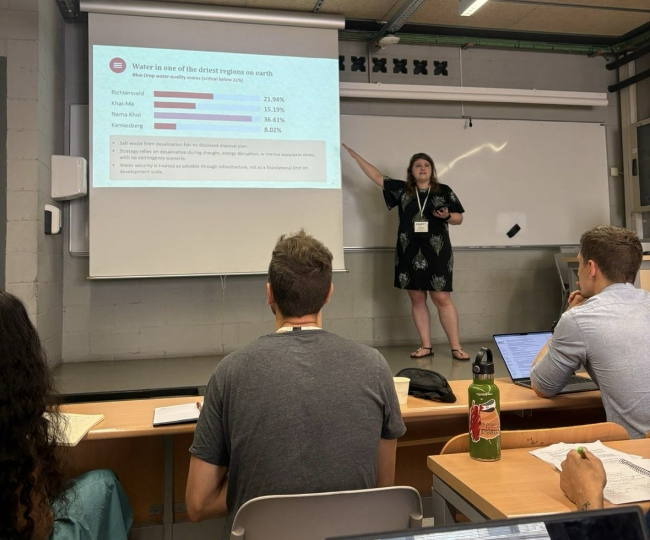
Figure. 1: Presentation at POLLEN, 3 July 2026
My presentation examined the proposed green hydrogen development in the Richtersveld, in the Northern Cape province of South Africa, asking whether large scale renewable energy developments can end up reproducing historical patterns of dispossession, exclusion and extraction, even when framed as part of a just energy transition. Drawing on the Strategic Environmental Assessment (SEA) process, I argued that questions of land, consent and environmental limits remain central to understanding the politics of green industrial development.
What came through clearly across the panel, and the conference more broadly, was how consistently these concerns surface across very different geographical contexts. Questions of land rights and Indigenous sovereignty, the governance of energy transitions, and the uneven distribution of their costs and benefits repeatedly surfaced in conversations across the conference. These discussions reinforced the importance of situating green hydrogen within the longer histories and ongoing structures of political ecology, coloniality and environmental injustice. Rather than treating green hydrogen as an entirely new energy frontier, POLLEN highlighted the need to ask what forms of power, extraction and inequality may be reproduced in the transition to a supposedly greener future.

Figure 2: In front of the Sagrada Familia, 4 July 2026
Beyond my own panel, POLLEN provided a valuable opportunity to reconnect with colleagues, meet researchers working across related fields, and engage with new and emerging research from a range of disciplinary perspectives. As is so often the case at conferences, some of the most valuable exchanges took place beyond the formal sessions, through conversations in the corridors, over coffee, and between presentations.
I am grateful to the conference organisers, panel convenors, and fellow participants for creating such a welcoming and intellectually stimulating space. POLLEN 2026 not only provided an opportunity to share my research but also challenged and expanded how I think about the questions at its centre.